Need residential concrete patios in Princeton?
Planning a driveway or patio? Send a request for an estimate, or Request a callback to check provider availability. There is no obligation.
No obligationSay you step outside and see bare dirt where a patio could be. You want a flat, tidy place for chairs and a grill. A concrete patio can give you that, and it can last for many years when it is poured and cured well.
Wwwcologuard Concrete is a referral service. It does not pour concrete. It connects homeowners with independent local providers in the Princeton area who build residential patios. This page walks through the timeline, from pour day to week four, so you know what to ask and what to expect.
Say you stand on the back step with a cup of coffee. The yard is bare dirt and a few weeds. You picture chairs, a grill and string lights. Then one question hits. Who pours it, and when?
Wwwcologuard Concrete is a referral service. It connects homeowners with independent local providers who handle concrete flatwork. Wwwcologuard Concrete does not pour anything itself. Request a callback to check provider availability in the Princeton area.
Picture a slab poured in a hurry just before a tropical storm. Rain lands on the surface in hour two. The top turns pitted and soft. It may need grinding or a redo later.
Now picture the same slab poured with a dry window ahead. The surface sets tight and smooth. Same concrete, different outcome. Timing is the difference.
Say the provider's workers arrive early. They mark the shape, dig out the soil and spread a packed gravel base. Forms and steel go in next. Many ranch homes here sit on slab-on-grade foundations, so they also check where the patio meets the house wall. Skipped prep is how patios sink later.
The truck arrives and the clock starts. Workers spread the concrete, level it and smooth it. In hot, humid weather it sets faster, so the work moves quickly. Many providers pour early in the morning to beat the heat. Pour day, then patience.
Say the finish looks perfect at sunset. That night the slab is still weak. A paw print, a dropped tool or a sprinkler can leave a mark that stays for good. Keep pets, kids and water away. Ask the provider how they protect the edges.
By day three, many slabs can take light foot traffic. No furniture yet. No grill. The inside is still gaining strength. Ask about the slab before you move anything onto it.
Heat pulls water out of concrete. Picture a sunny afternoon with a hot breeze. The top dries faster than the middle, and hairline cracks start to show. Many providers mist the slab, cover it or apply a curing compound. Follow their watering advice closely.
Around week four, concrete reaches most of its design strength. Now the heavy grill, big planters and outdoor kitchen pieces can move in. Sealers often wait until about this point too. Your provider will say what fits your mix.
Say you lay a garden hose in a rectangle. Set your table and chairs inside it. Pull a chair back. Does it stay on the slab? A table for four often fits a space near 10 by 12 feet. Add room for a grill and walking paths. A bigger slab costs more, but it is easier to enjoy.
The surface changes how the patio looks and feels underfoot.
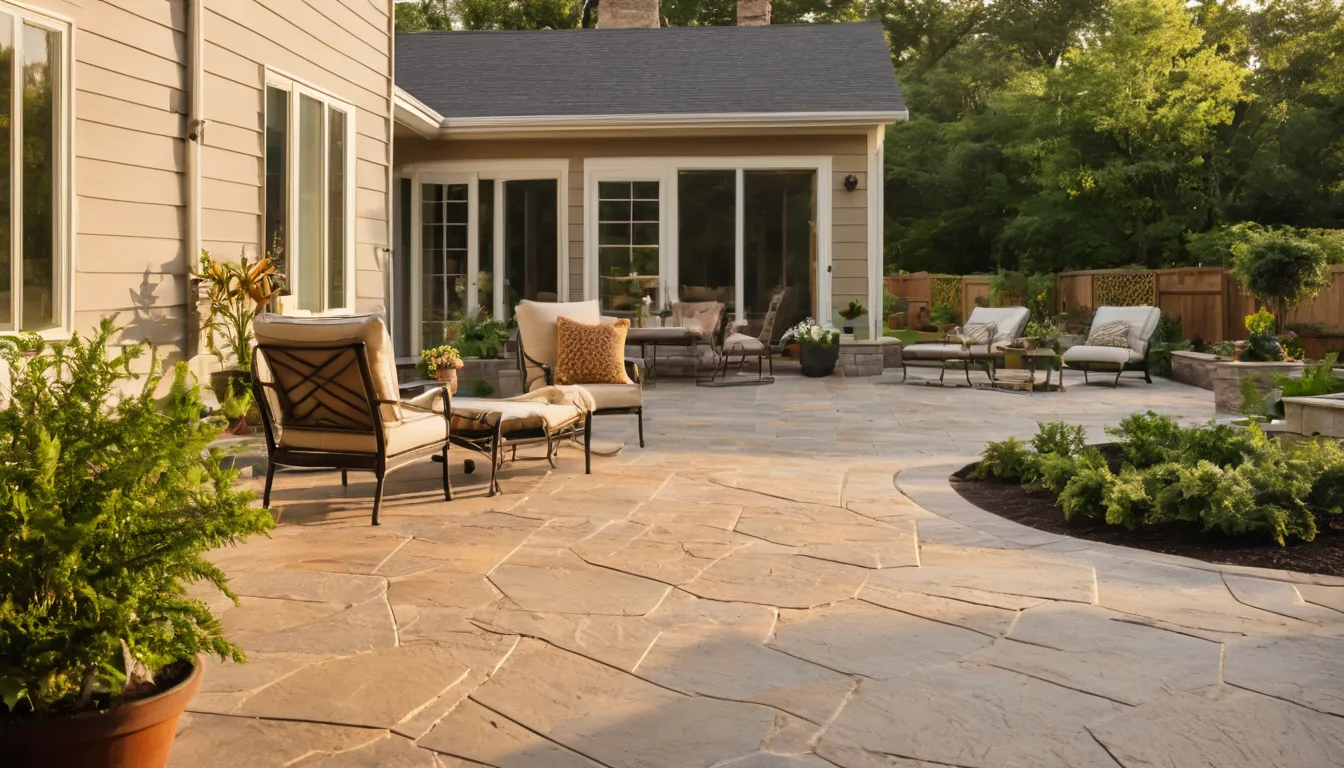
Stamped concrete patios press patterns into fresh concrete to mimic stone, brick or wood. The timing is tight. Color and stamping must happen while the surface is still workable. Ask how the provider handles stamping on a hot day. Sealing later keeps the color rich.
Picture a heavy downpour. Water runs off the patio toward the house wall and pools there. Over weeks, soil can shift. A patio should slope gently away from the house, often about a quarter inch per foot. If you already see wall cracks or sticking doors, foundation repair experts can assess the house before you build. Pier-and-beam homes need extra care near vents and crawl spaces.
A short list of questions helps you compare quotes fairly.
Get the quote in writing, with the square footage listed.
Think of this as prevention after the work is done. Sweep weekly. Rinse with a hose. Use mild soap for spills, and wipe up grease early. Aim sprinklers away from the slab so standing water does not leave stains. On a rare cold snap, skip rock salt, since it can flake the surface.
Many homeowners reseal every two to three years. Sealer helps block stains and sun fade. Fill hairline cracks early, before summer rain gets underneath. If a crack widens or one side sits higher, ask a provider to look at it.
Say it is week zero and you are ready. Request a callback to talk through your yard and check provider availability.
Providers mark the shape, check slope and plan the patio edges to fit your yard and house.
Soil is dug out and a packed gravel base is added so the slab sits level.
Wood forms and steel go in, then concrete is poured, leveled and finished.
Providers advise on damp curing, sealer timing and when furniture can return.
Patio prices vary by size, finish, soil and access to your yard. These are typical U.S. ranges only. Get a written quote from a local provider before any work begins.
| Item | Typical range | Notes |
|---|---|---|
| Plain broom-finish slab | $6 – $12 per sq ft | Common choice for basic patios |
| Stamped concrete | $12 – $22 per sq ft | Pattern and color raise the price |
| Exposed aggregate | $8 – $16 per sq ft | Pebbly look, hides small marks |
| Excavation and gravel base | $1 – $3 per sq ft | Depends on soil and access |
| Sealer | $1 – $3 per sq ft | Reapplied every few years |
| Small 12 by 12 patio total | $1,500 – $3,500 | Varies by finish and site |
Tell us about your yard, the patio size you picture and the finish you like.
Wwwcologuard Concrete connects you with an independent local provider in the Princeton area.
Check the written quote for size, base, thickness, finish and curing steps.
The provider builds the patio. You follow the curing advice, then enjoy it.
Heat, rain and curing days all affect how well a new slab holds up.
Providers in our network run their own businesses and do the actual concrete work.
Simple timelines explain pour day, first night and week four, so you know what to ask.
Compare square footage, thickness and finish side by side before choosing a local provider.
Planning a driveway or patio? Send a request for an estimate, or Request a callback to check provider availability. There is no obligation.
No obligationMany slabs handle light foot traffic after about two to three days, depending on heat, mix and thickness. Keep furniture and grills off until your provider says the slab is ready, often near week four.
Typical U.S. prices run about $6 to $12 per square foot for a basic slab, and more for stamped work. Costs vary by site and finish, so ask for a written quote.
Yes, but providers plan around it. They often pour early, keep the surface damp and watch for storms. Ask how your provider handles heat and rain on pour day.
Planning a driveway or patio? Send a request for an estimate, or Request a callback to check provider availability. There is no obligation.
No obligation